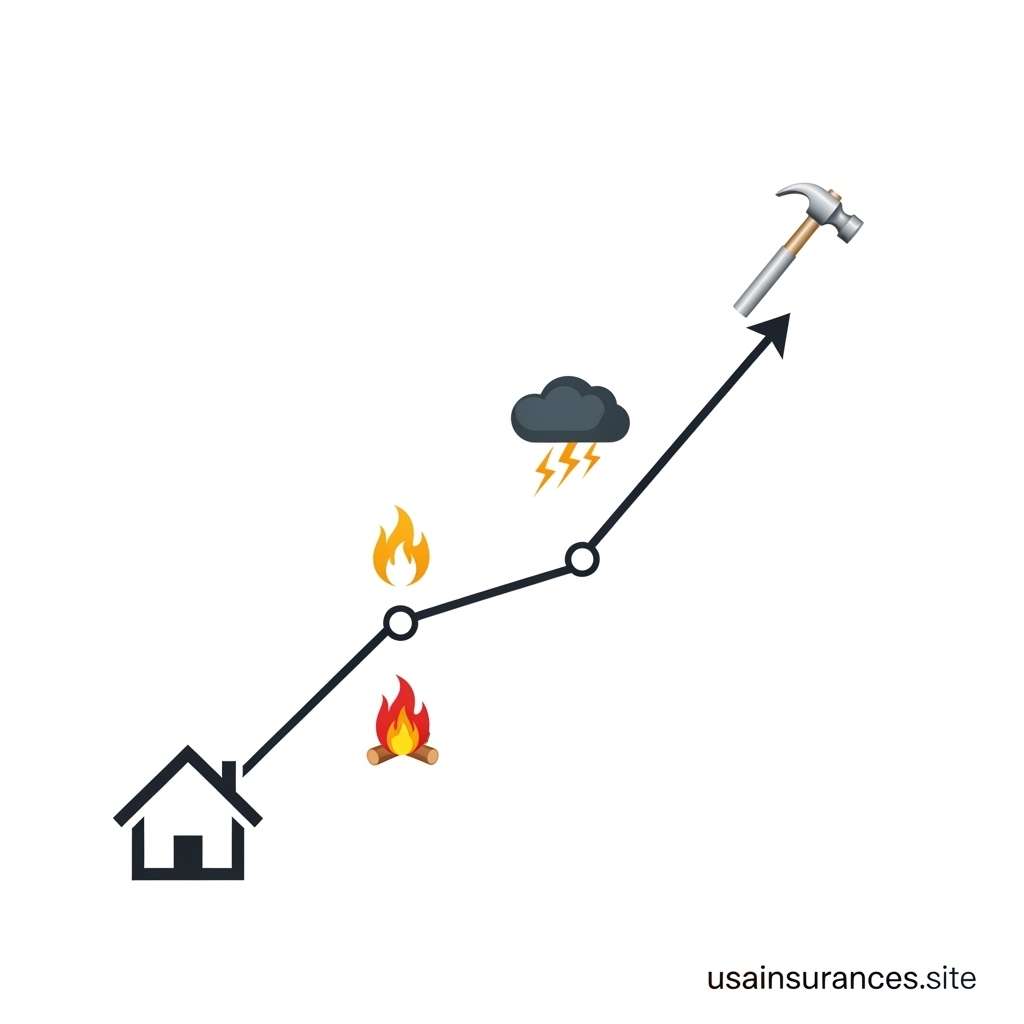
Home insurance premiums in the USA have been increasing steadily, and 2025 is no exception. Rising costs impact homeowners nationwide, making it more important than ever to understand why premiums are climbing and how to manage your coverage efficiently. This guide examines the key factors driving higher rates and provides actionable tips to help you control your home insurance costs.
Table of Contents
Key Factors Driving Home Insurance Premium Increases
1. Natural Disasters and Climate Risk
Increasing occurrences of hurricanes, wildfires, floods, and tornadoes have led insurers to adjust rates to cover higher claims. States prone to these events often see the steepest increases.
- Florida and California: High risk for hurricanes and wildfires
- Midwest: Tornado and flood-prone areas
- Coastal regions: Rising sea levels increase property vulnerability
2. Inflation and Construction Costs
The cost to repair or rebuild homes has risen due to inflation, labor shortages, and higher material costs. This directly affects premiums because insurers must cover the replacement value of homes.
- Lumber, steel, and concrete prices remain elevated
- Labor costs for construction and restoration are higher
- Claims payouts increase, leading to higher insurance pricing
3. Increased Claim Frequency
More frequent insurance claims—minor and major—push companies to raise premiums to maintain financial stability.
- Frequent small claims increase overall risk pool
- Rising auto, property, and liability claims influence home insurance pricing
- Companies adjust rates to remain solvent in high-claim regions
4. Risk Assessment Changes
Insurers are using advanced analytics, weather modeling, and property data to better assess risk. While this allows more accurate pricing, it can result in higher premiums for high-risk areas.
- ZIP code-based pricing models
- Historical loss data and predictive analytics
- Risk-tiering of homes based on construction type and location
5. Regulatory and Market Pressures
Insurance markets are influenced by state regulations, reinsurance costs, and market competition. Some states have seen rate increases due to:
- State-mandated coverage requirements
- Limited competition in high-risk zones
- Reinsurance cost increases for insurers
Strategies to Manage Rising Home Insurance Premiums
Even with rising rates, homeowners can reduce costs using these methods:
- Increase Your Deductible
Higher deductibles lower your monthly premium but require more out-of-pocket in claims. - Bundle Policies
Combine home and auto insurance with the same provider to receive discounts. - Improve Home Safety and Security
Install smoke detectors, security systems, or hurricane-resistant features to qualify for savings. - Maintain a Good Claims History
Avoid frequent small claims to prevent premium increases. - Shop Around Annually
Comparing multiple insurers ensures you get competitive rates. - Review Coverage Limits
Adjust coverage to match your property’s current value and avoid over-insuring.
Conclusion
Rising home insurance premiums in 2025 are driven by natural disasters, inflation, higher construction costs, increased claim frequency, and advanced risk assessments. Homeowners in high-risk areas feel the most impact, but strategic steps—like bundling, increasing deductibles, and improving home safety—can help mitigate rising costs. Staying informed and actively comparing quotes is essential for controlling expenses while maintaining adequate coverage.
About the Author